

Hurricane Literacy game
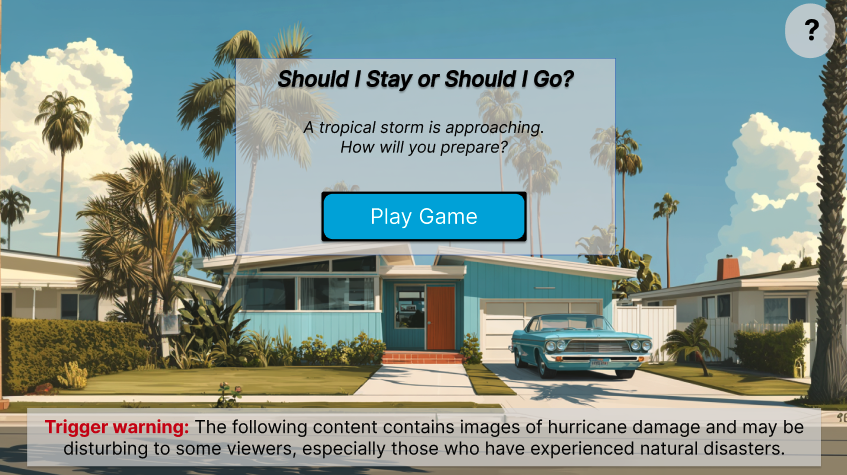
Should I Stay or Should I Go?
This project explores how interactive storytelling can improve public understanding of hurricane risk. Through a narrative-based simulation game, users learn how to interpret storm information, assess their personal vulnerability, and make safer decisions during hurricane events.
Case Study
Bentley University Team Project (Isabelle Krueger, Kathi K., Maxwell Z., and Elizabeth M.)
Timeline
Fall 2025
Role
Designer
Tools Used
Figma, Sora, Midjourney, Canva
Background
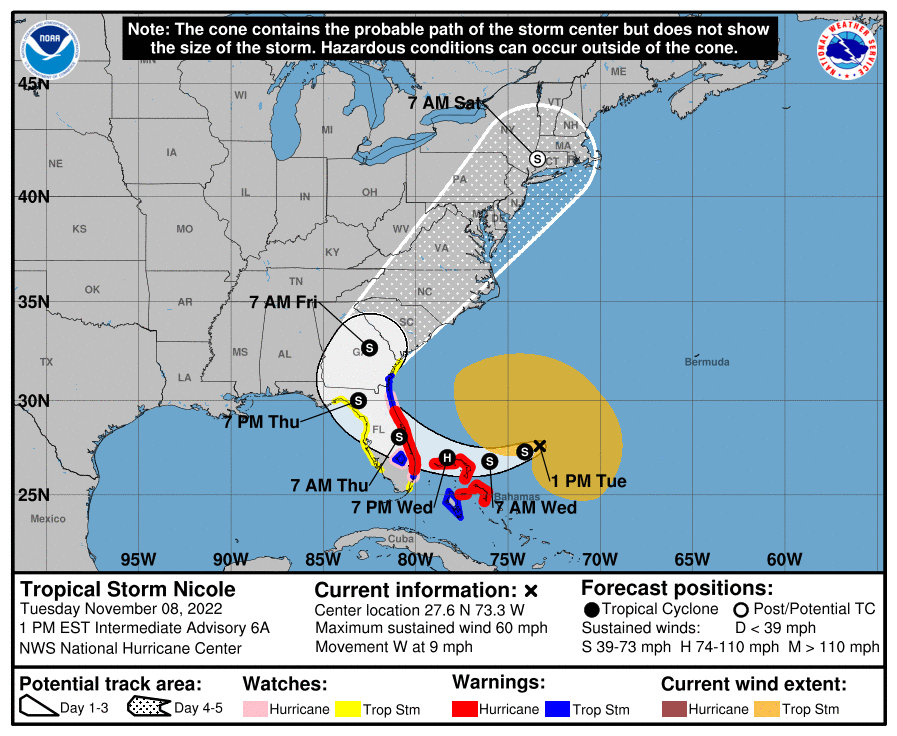
This project is based on Kathi K’s previous research on understanding hurricane forecast information, particularly the National Hurricane Center’s “cone of uncertainty.” While this graphic is commonly used during storms, it often leads to misconceptions, causing people to make incorrect assumptions about their personal risk and vulnerability. Our objective was to enhance people’s comprehension of the range of risks posed by hurricanes and how these risks apply to their specific locations. To achieve this, we developed an immersive, decision-based game that fosters hurricane literacy through experiential learning rather than passive information.
The game immerses users in a developing storm scenario, where their choices influence the subsequent events. By navigating through various situations and witnessing the outcomes of their decisions, players gain insights into storm threats, uncertainty, and protective measures in a tangible and memorable manner. Inspired by branching decision games like The Oregon Trail, the experience not only highlights the unpredictability and danger of hurricanes but also provides practical steps for enhancing safety. Scenarios encompass early preparation decisions to navigating worsening conditions, and each play-through connects to real historical storm events to ground the experience in reality.
Ideation of game concept
To move from concept to experience, we started by defining the learning goals of the game and connecting them to key decision points for the player. We wanted players to understand that hurricane risk goes beyond just storm category, including threats like flooding rain, storm surge, wind, and post-storm dangers. Another focus was helping users interpret forecast information correctly, especially the Cone of Uncertainty, and recognize that impacts can occur far outside the projected path. These ideas shaped the types of choices players would face and the situations they would move through.’
The story was designed to begin calm and familiar, so players ease into the situation before the storm grows more severe. As conditions worsen and the hurricane shifts from its predicted path, players are faced with more urgent decisions related to preparation, safety, evacuation, and managing resources. Each decision connects back to a “score” they would receive on how well they did that would and is tracked to show how well players respond as the situation changes. The feedback at the end of each scenario helps players see how their choices affected the outcome and encourages them to try again to explore different decisions and results. Helpful hints and guidance are woven into the experience to introduce hurricane terminology, safety actions, and forecasting concepts in a way that feels natural within the story rather than instructional.
We explored different tools to test both how the story flowed and how players would interact with the experience. An early version was built in Twine to see if it could handle the branching storyline, media elements, and player prompts. While Twine worked for basic story logic, images, and audio, it was difficult to edit and iterate quickly. Since testing and refining the experience was a priority, we moved our main prototyping into Figma, which allowed us to work faster and make changes more easily.
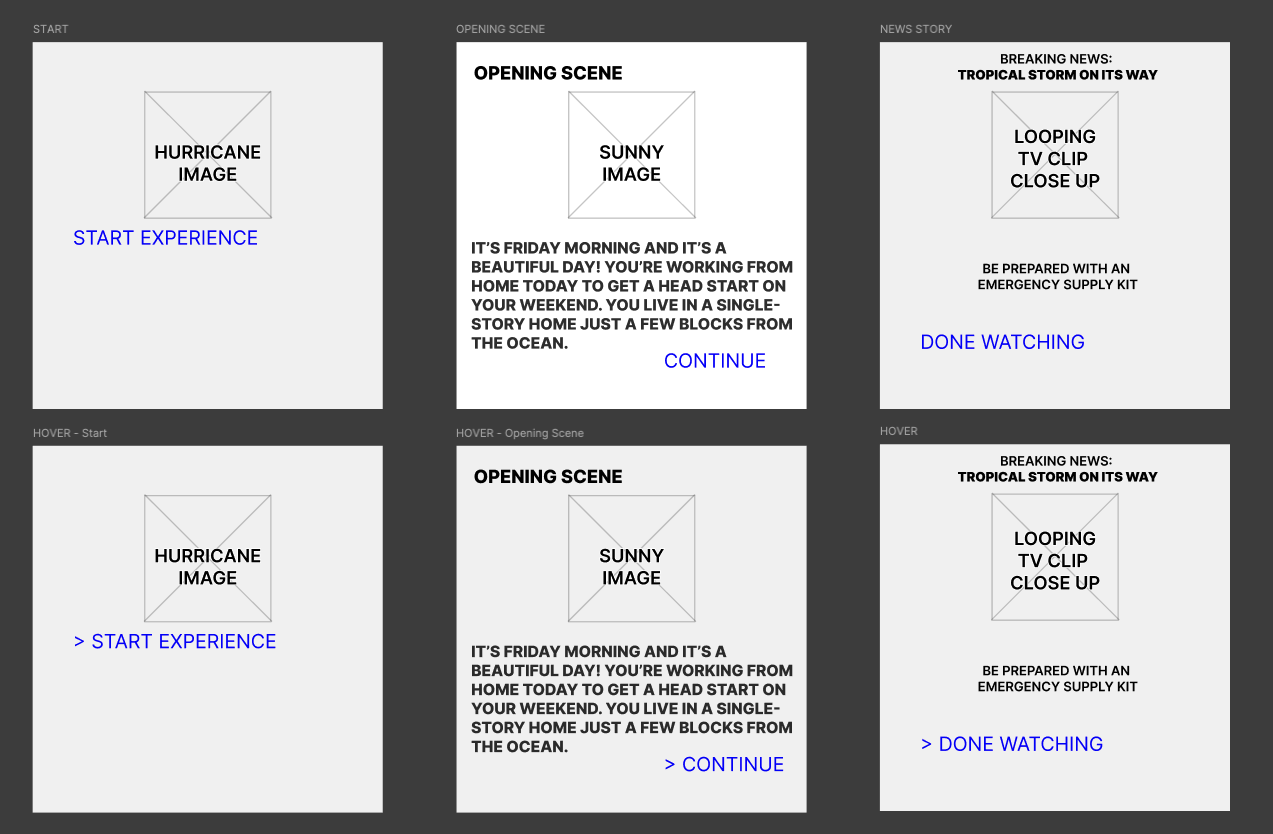

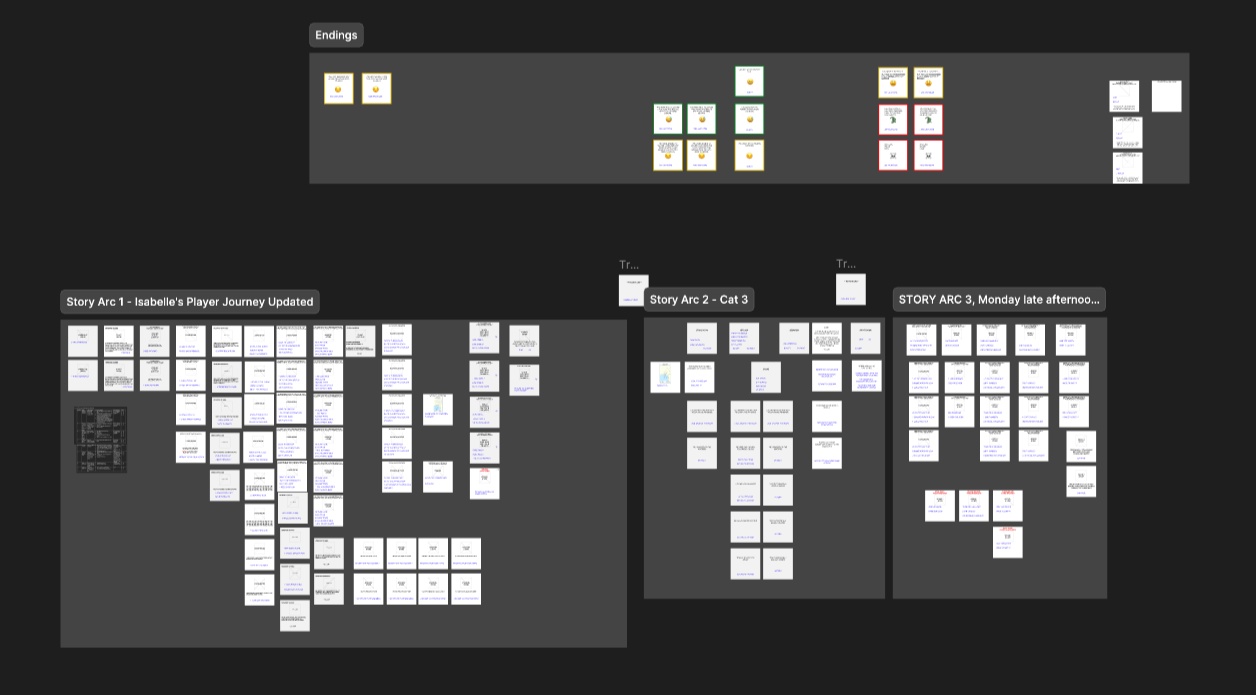
We created our first low-fidelity version focused only on the story, decision points, and prompts. Keeping it text-based helped us see how users followed the narrative and responded to choices without visuals influencing their reactions. While we considered both a storybook-style narrative and a click-and-point format, Kathi’s decision-point journey for people in a potential evacuation scenario guided our direction. It translated naturally into an interactive structure where players explore their environment, find supplies, and prepare for impact, which aligned best with a click-and-point adventure style.
The game is organized into story arcs that mirror how a storm develops over time. In the first arc, the storm begins as a tropical storm and progresses to a hurricane watch, while players move through familiar home spaces like the living room, kitchen, and bedroom. Interactions are tied to realistic decisions someone might face during a storm. Each action connects back to a learning goal, reinforcing either accurate risk understanding or common misconceptions. Player choices are tracked throughout the experience, and the final score reflects how effectively they applied hurricane literacy concepts as conditions evolved.
Early Design Concepts
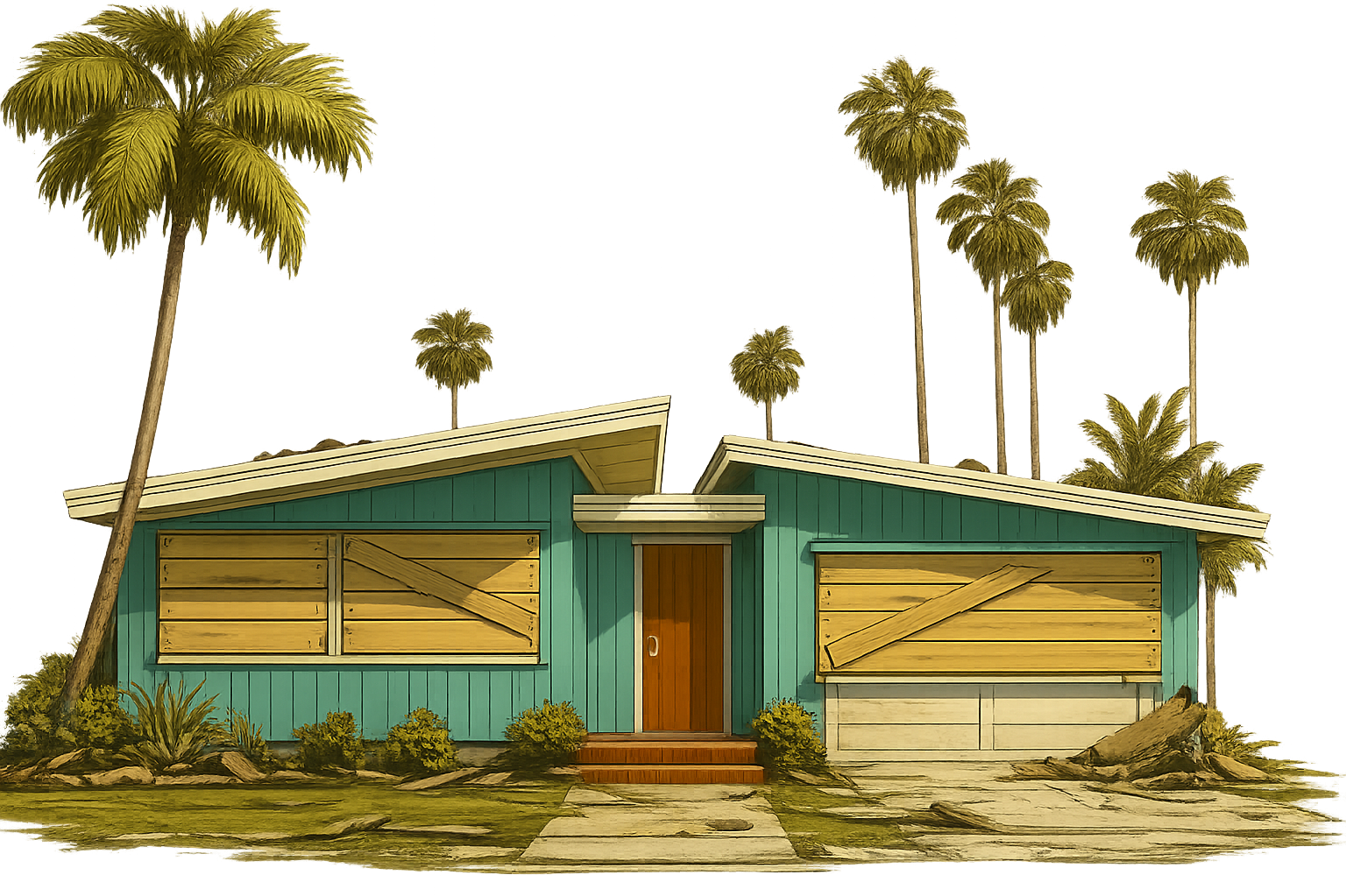
During the early design phase, we explored various visual directions. Leveraging AI image tools such as Midjourney and Sora, we generated a diverse range of environmental concepts, spanning from highly realistic storm devastation scenes to a more Pixar or Illustration depiction.
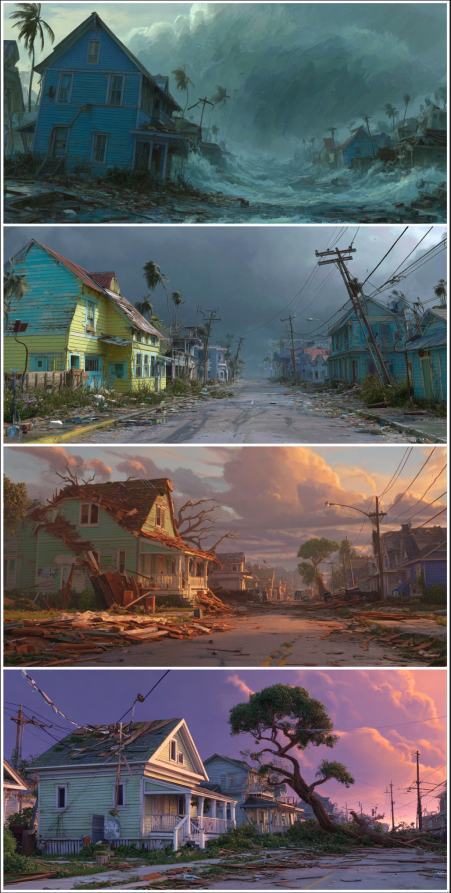
Our team experimented with a few initial interface screens, including the start experience screen and early in-game environments like the living room and surrounding neighborhood. These early layouts provided valuable insights into player navigation, movement between viewpoints, and interactions with objects in a first-person perspective. .
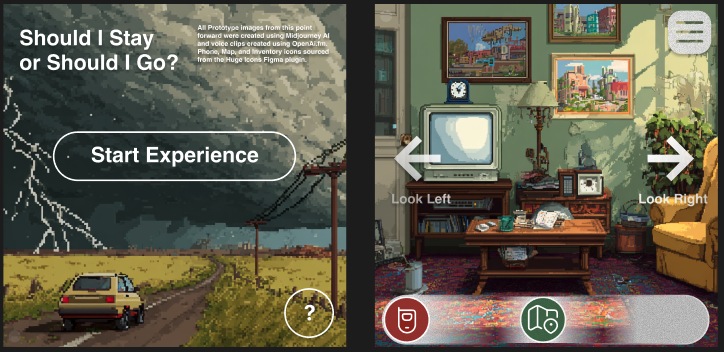
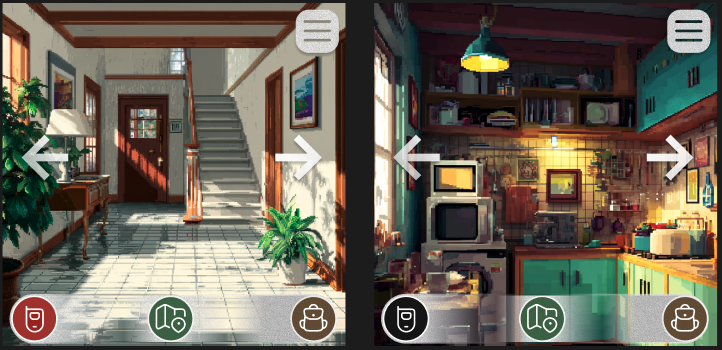
To enhance immersion and create a profound sense of presence within the environment, we paired impactful storm visuals with immersive audio elements like lightning and wind. These screens were the ones presented during user testing, where we sought feedback
User Testing
We conducted usability testing to gather feedback on the low-fidelity prototype of our hurricane literacy game. We recruited six participants from our personal networks across the country, comprising three men and three women. Half of the participants had significant hurricane experience, having lived in storm-prone regions or experienced past storms, while the other half had minimal hurricane knowledge. Participants also varied in their experience with digital gaming.
The testing was conducted through one-on-one remote sessions over Zoom, with one facilitator guiding the session while the rest of the team observed. Each session commenced with a brief interview to understand the participant’s background and establish rapport. Subsequently, participants were given control of the prototype and asked to play while thinking aloud, with the facilitator prompting them to explain their reasoning. After playing, participants were debriefed, asked for their overall impressions, and all chose to replay the experience. In some sessions, we also showcased early visual style options and gathered reactions.
Overall, participants found the concept enjoyable and believed the game aided their learning or reinforced their hurricane knowledge. Even in its low fidelity form, they became engaged in their decisions and replayed the game to explore various outcomes. However, the prototype lacked clarity in conveying that the house was an explorable space. Early linear segments created the impression of a story sequence, leading many to misinterpret “go left” and “go right” as advancing in the storyline rather than navigating a room. Participants felt most comfortable when they had a sense of agency, expressing frustration when forced down a path or encountering dead ends. They anticipated that their choices would influence outcomes and were surprised to discover that inaction could also result in lost points. While players sought confirmation of their actions, they preferred not to receive immediate judgment on their decisions, preferring to discover outcomes through replay. Another significant aspect was the lack of clear time progression. Participants, particularly those with hurricane experience, desired more precise cues regarding the storm’s location, changes, and arrival timing. Most also mentioned that they didn’t fully comprehend the game’s objective until they “lost” the first round and requested clearer upfront context about the purpose of making decisions to stay safe.
Navigation Felt unclear
Participants didn’t understand they were inside an explorable house. Navigation language like “go left/right” was confusing and made the experience feel like a linear story rather than a physical environment.
Lack of clarity around time & storm progression
Players wanted to know where the storm was, how conditions were changing, and how much time they had to act. Without this, decision urgency didn’t feel present.
The environment Felt Unfitting
The visual setting felt more like a cozy cottage home than a tropical, hurricane-prone location, which weakened realism and made it harder for players to connect the experience to an actual hurricane scenario.
Redesign & Refinement
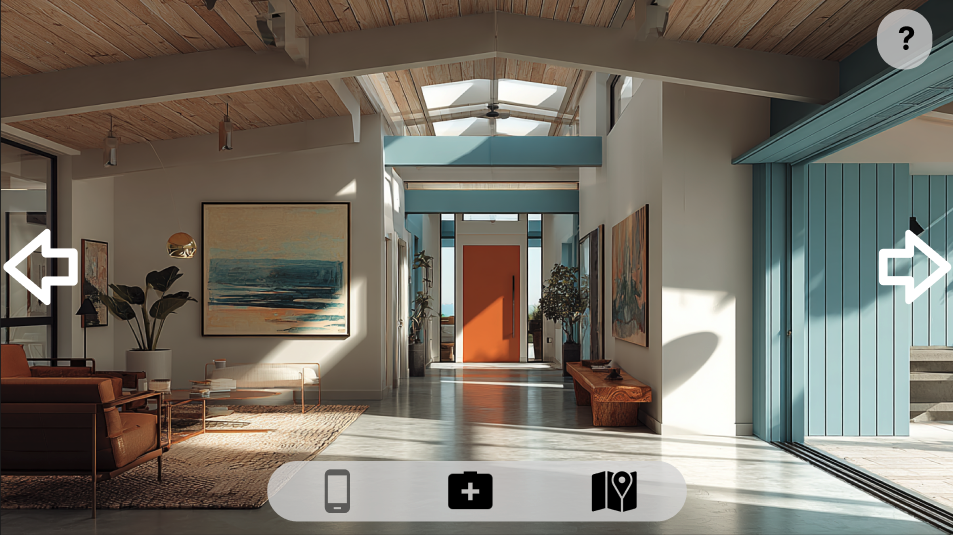
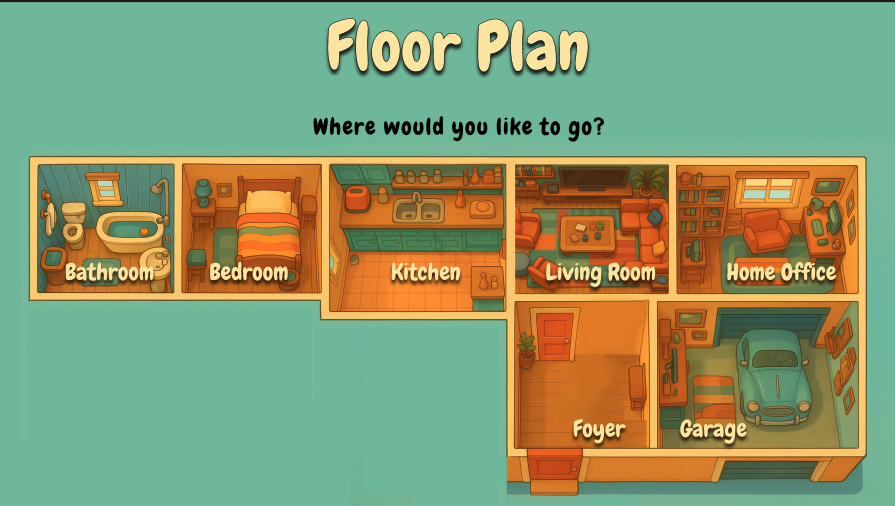
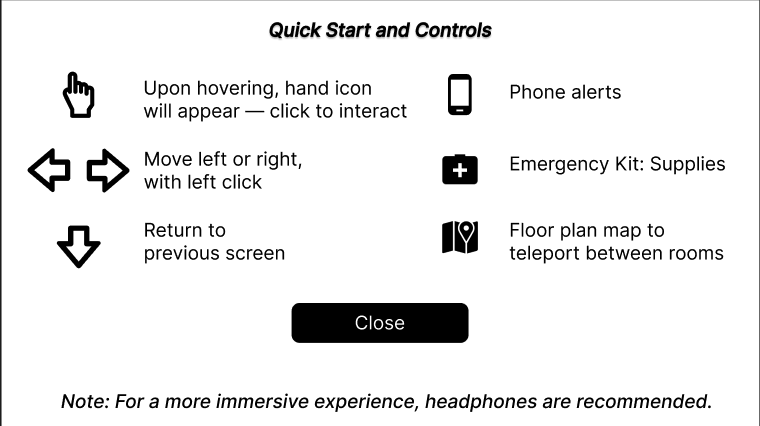
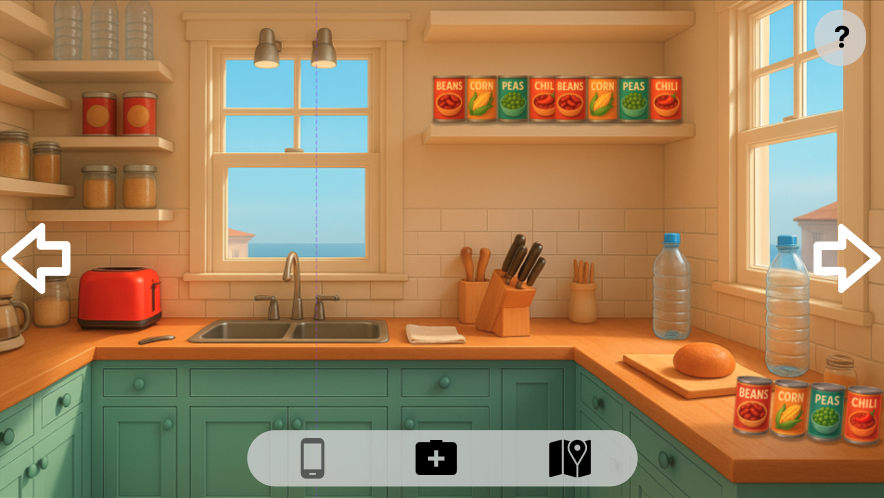
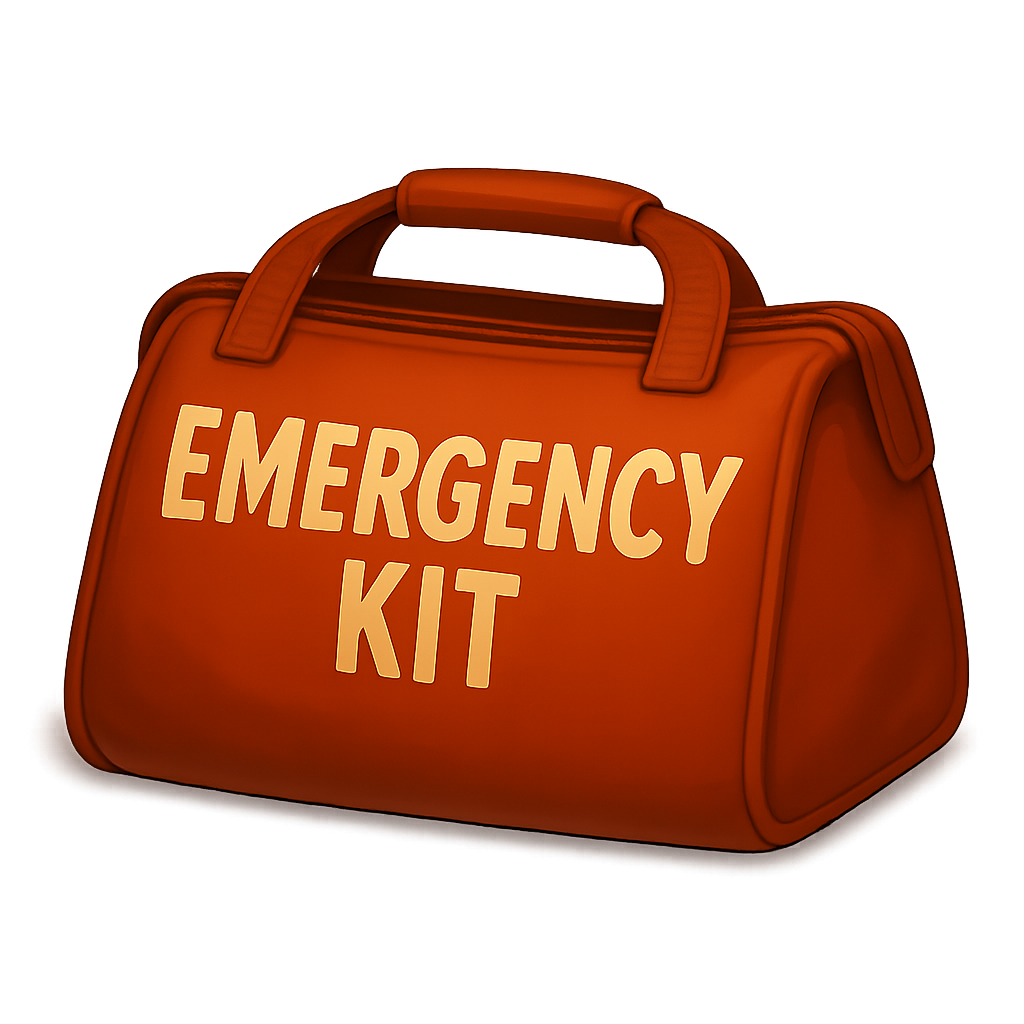
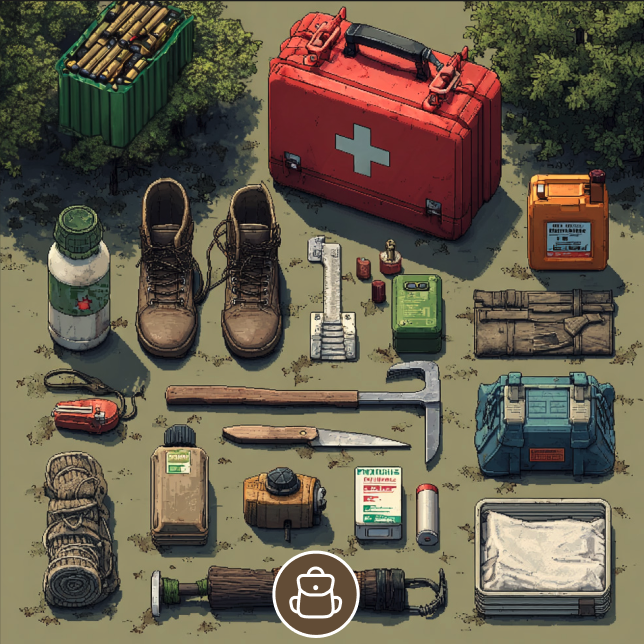
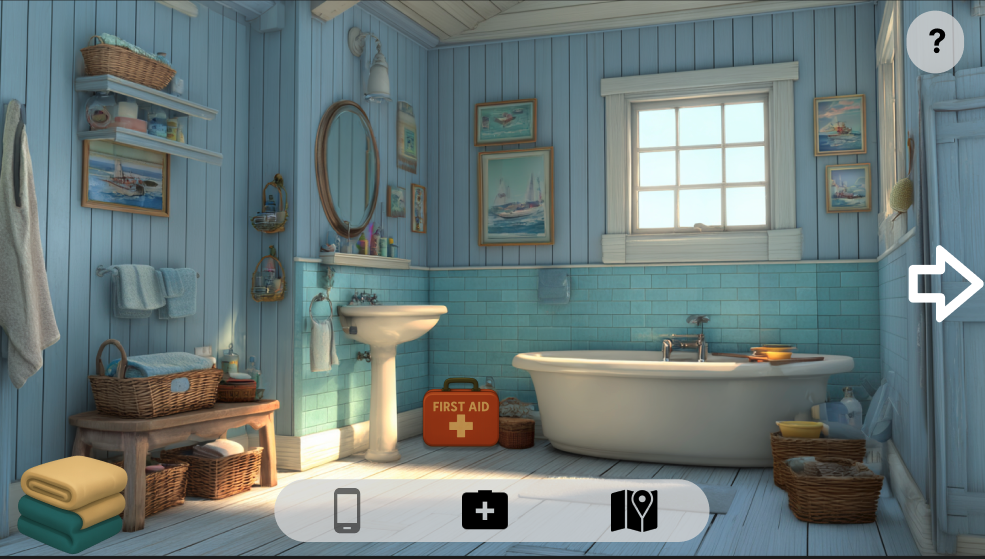
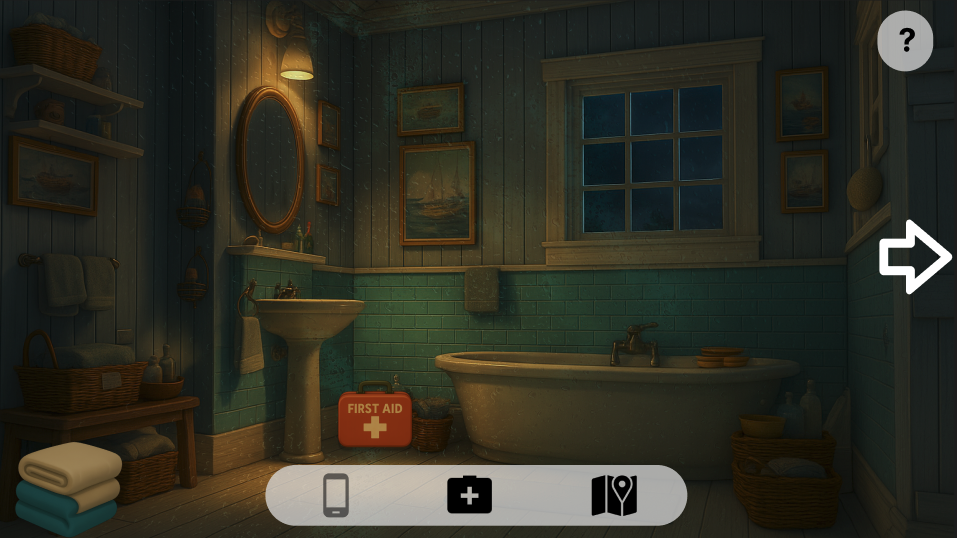
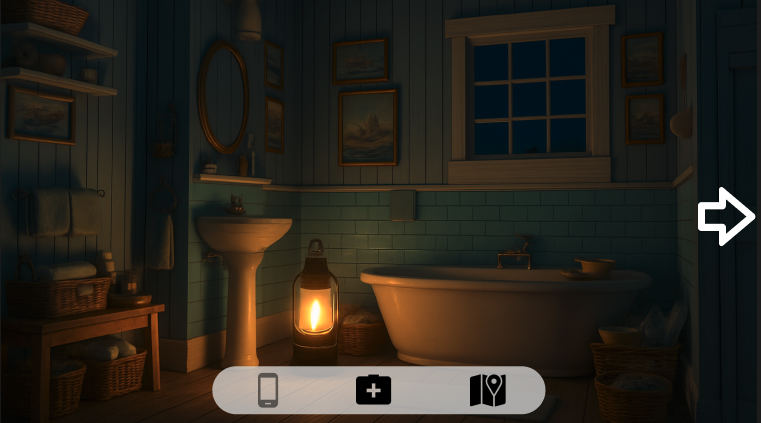
Based on user feedback, we refined both the interface and environmental storytelling to improve clarity and immersion. We introduced a floor plan navigation system so players could better understand the home as a physical space and move intentionally between rooms, rather than feeling like they were progressing linearly through a story. An explanation of controls and a quick-start guide were added at the beginning to reduce confusion around movement, interaction, and tools like the emergency kit. We also strengthened the sense of time and storm progression by visually updating environments across story arcs. Lighting, weather outside windows, and interior conditions shift from calm daylight to darker, more storm-impacted scenes, helping players feel the urgency increase as the storm approaches. These refinements aligned the game’s structure with players’ mental models and made the experience feel more intuitive and immersive.
Final Product
Good Luck!
if The Team had longer than a semester…
If we had longer than 15 weeks, we would expand the system to include more dynamic variables that influence how each playthrough unfolds. Players could begin by selecting factors such as their distance from the storm’s forecast path, hurricane category strength, or housing type, allowing the experience to adapt to different risk levels and scenarios. These variables would change the types of threats encountered, the urgency of decisions, and the outcomes presented, making the learning more personalized and realistic.
We would also vary storm behavior across replays so conditions don’t unfold the same way twice. This would better reflect the uncertainty of real hurricane forecasting and encourage repeated play as a way to build deeper understanding. Additional polish would focus on environmental detail, expanded decision branches, and more nuanced feedback systems to strengthen both immersion and educational impact.